

Time Attendance System in Dubai: Complete Guide to Biometric Attendance Solutions
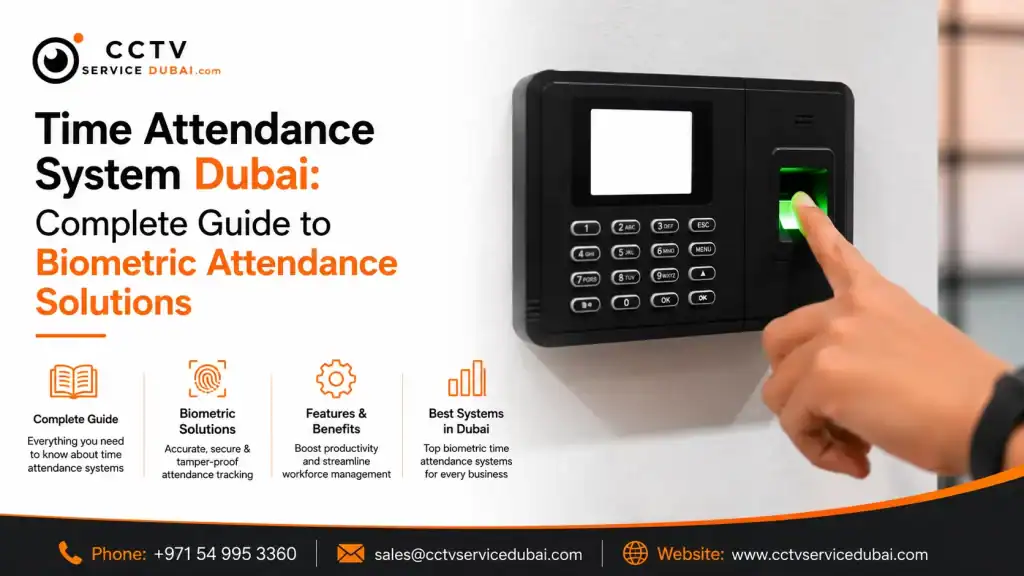
What Is a Time Attendance System? A time attendance system in Dubai helps businesses record employee working hours electronically instead of relying on manual registers or spreadsheets. Modern systems can use fingerprints, facial recognition, RFID cards, PINs, or mobile-based authentication to record employee check-ins and check-outs. A complete attendance solution can help HR teams manage: Employee attendance Check-in and check-out Working hours Late arrivals Early departures Overtime Shifts Leave Attendance reports For businesses with multiple employees, automating attendance can save HR teams considerable time and reduce manual errors. Why Do Businesses Need a Time Attendance System in Dubai? Managing employee attendance manually becomes difficult as a company grows. A business with 10 employees may manage attendance using a spreadsheet. But imagine managing 100 or 500 employees across different departments. HR teams may need to track: Working hours Multiple shifts Overtime Late arrivals Leave Holidays Branch locations A digital attendance system can centralize this information and make reporting easier. Key Benefits Accurate attendance records Reduced manual work Faster reporting Better employee accountability Easier payroll preparation Centralized employee records Real-time attendance visibility How Does a Biometric Attendance System Work? A biometric attendance system in Dubai identifies employees using unique biological characteristics such as fingerprints or facial features. The basic process is: Employee → Biometric Verification → Attendance Record → Software → HR Report For example: An employee arrives at the office. They scan their fingerprint or face. The device verifies their identity. The system records the arrival time. The information is synchronized with the attendance software. HR can access the attendance record. The same process occurs when the employee checks out. This creates a digital record that can be used for attendance reporting and workforce management. What Types of Attendance Systems Are Available? Businesses can choose from several technologies depending on their requirements. Fingerprint Attendance Fingerprint systems identify employees using their registered fingerprints. They can be suitable for: Offices Warehouses Retail businesses Factories Small and medium-sized companies Facial Recognition Facial recognition systems verify employees using their facial features. They can be useful when businesses want a contactless authentication method. RFID Attendance Employees use cards or RFID credentials to record attendance. This can be useful for organizations that already use access cards for door security. PIN-Based Attendance Employees enter a personal PIN to record attendance. This is simple but generally provides less identity assurance than biometric authentication. Mobile Attendance Employees can record attendance through a mobile application, depending on the software and business requirements. What Types of Attendance Systems Are Available? Businesses can choose from several technologies depending on their requirements. Fingerprint Attendance Fingerprint systems identify employees using their registered fingerprints. They can be suitable for: Offices Warehouses Retail businesses Factories Small and medium-sized companies Facial Recognition Facial recognition systems verify employees using their facial features. They can be useful when businesses want a contactless authentication method. RFID Attendance Employees use cards or RFID credentials to record attendance. This can be useful for organizations that already use access cards for door security. PIN-Based Attendance Employees enter a personal PIN to record attendance. This is simple but generally provides less identity assurance than biometric authentication. Mobile Attendance Employees can record attendance through a mobile application, depending on the software and business requirements. What Is a Biometric Time Attendance System? A biometric time attendance system in Dubai combines employee identification with time tracking. Unlike a simple attendance register, the system can automatically record when employees enter and leave. It can also support features such as: Shift management Overtime calculation Attendance reports Department management Leave management Employee profiles Late-arrival reports Early-departure reports This can make it easier for HR departments to understand employee attendance patterns. What Is Attendance Software in Dubai? An attendance machine collects the employee’s attendance event, but the attendance software in Dubai is what helps HR teams manage and analyze that information. Depending on the platform, attendance software may provide: Employee management Attendance dashboards Shift scheduling Leave management Overtime calculation Reports Department management Device management Payroll-related exports The software can be installed on a local server or provided through a cloud-based platform, depending on the product. For larger organizations, software selection is just as important as choosing the biometric device. What Should You Look for in Attendance Software? Before purchasing attendance software, consider the following: Employee Capacity How many employees can the system support? Multiple Locations Can HR manage employees across different branches? Shift Management Can the software handle rotating or overnight shifts? Leave Management Can employees’ leave and attendance be managed from the same platform? Reporting Can HR generate reports for: Daily attendance Monthly attendance Late arrivals Overtime Absences Working hours Integration Can the system integrate with payroll, HR, access control, or other business software? Cloud Access Can authorized administrators access attendance information remotely? What Is Fingerprint Attendance in Dubai? Fingerprint attendance in Dubai remains a practical option for businesses that want employee identification without relying on physical attendance cards. A fingerprint terminal typically stores an employee’s registered biometric template. When the employee places their finger on the scanner, the device verifies the fingerprint and records the attendance event. Advantages of Fingerprint Attendance Easy employee identification No attendance cards required Reduced risk of employees sharing credentials Fast check-in Digital attendance records Suitable for many office environments However, businesses should choose devices according to the environment. For example, employees working with machinery or materials that affect fingerprint readability may benefit from alternative authentication methods such as facial recognition or RFID. What Is an Online Attendance System in the UAE? An online attendance system UAE solution allows authorized users to manage attendance information through a network or cloud-based platform. Depending on the solution, HR managers may be able to: View attendance remotely Manage employees Create shifts Generate reports Monitor multiple branches Access attendance information through a browser Manage devices remotely This can be especially useful for businesses with employees working across multiple locations. Traditional vs Online Attendance Traditional Attendance Online Attendance System Manual records Digital records Local access Remote access possible More administrative
Best IT Solutions Company in Dubai: How to Choose the Right IT Partner

How Can You Choose the Best IT Solutions Company in Dubai? The best IT solutions company in Dubai should do more than fix computers when something goes wrong. A reliable IT partner should help businesses manage networks, devices, cloud platforms, cybersecurity, backups, software, and day-to-day technical issues. Instead of choosing a provider based only on price, businesses should consider: Technical expertise Response time Service availability Cybersecurity capabilities Network support Cloud expertise Backup and recovery Proactive monitoring Scalability Long-term support A good IT partner should understand your business and prevent technical problems before they affect productivity. Why Do Businesses Need Professional IT Support in Dubai? Modern businesses depend heavily on technology. A typical company may use: Business computers Servers Wi-Fi networks Cloud applications Email platforms Printers Firewalls Business software Data storage Security systems If one of these systems fails, employees may lose valuable working time. Professional IT support helps businesses identify and resolve these issues quickly. Instead of waiting for something to break, companies can use proactive monitoring and maintenance to identify potential problems earlier. What Services Should an IT Solutions Company Provide? A professional IT solutions company in Dubai should offer services that cover both daily technical support and long-term infrastructure requirements. Common services include: IT help desk support Network installation Server management Cloud solutions Microsoft 365 support Cybersecurity Data backup Disaster recovery Hardware support Software troubleshooting Firewall management Wi-Fi solutions IT consulting The exact services required depend on the size and technical environment of the business. A small office may need basic IT support and Microsoft 365 management, while an enterprise organization may require a complete managed infrastructure solution. What Do IT Support Companies in Dubai Actually Do? IT support companies in Dubai help businesses maintain their technology infrastructure and resolve technical problems. Support can be provided remotely, on-site, or through a combination of both. Typical support requests include: Computer problems Network connectivity issues Email problems Printer configuration Software errors Password and account issues Server problems Wi-Fi issues Security alerts Hardware troubleshooting Good IT support is not only about responding when someone raises a ticket. The better approach is to identify recurring problems and find a permanent solution. What Are Managed IT Services in Dubai? Managed IT services Dubai refers to outsourcing some or all of a company’s IT management to an external provider. Instead of hiring a large internal IT team for every requirement, a business can work with a managed service provider that monitors and supports its technology infrastructure. Managed services may include: 24/7 monitoring Network management Server monitoring Security management Backup monitoring Patch management Help desk support Cloud management Device management IT reporting The goal is to make IT more predictable and easier to manage. What Is an IT Managed Service Provider in Dubai? An IT managed service provider Dubai delivers ongoing IT management rather than providing only one-time technical assistance. For example, an MSP may continuously monitor: Network → Servers → Devices → Security → Backup → Cloud Services If an issue appears, the provider can investigate it before it becomes a major business disruption. Traditional IT Support vs Managed IT Traditional IT Support Managed IT Services Often reactive Proactive Pay for individual support Recurring service model Issues addressed after they occur Continuous monitoring Limited visibility Regular reporting May focus on troubleshooting Focuses on overall IT health Managed services can be particularly useful for businesses that want predictable IT costs and ongoing technical support. What Should an IT Solution Provider in Dubai Help With? An IT solution provider in Dubai should be able to understand the complete technology environment rather than recommending isolated products. For example, when setting up a new office, the provider may need to plan: Internet connectivity Firewall Network switches Wi-Fi Structured cabling Computers Printers Servers or cloud services Microsoft 365 Cybersecurity Backup User management The advantage of working with a solution provider is that these components can be planned as one connected infrastructure. How Important Is Cybersecurity for Dubai Businesses? Cybersecurity should be part of every modern IT strategy. Businesses store valuable information such as: Customer information Employee records Financial data Business documents Passwords Contracts Intellectual property A reliable IT provider should therefore help businesses implement appropriate security controls. These can include: Firewalls Endpoint protection Multi-factor authentication Secure Wi-Fi Access controls Backup Patch management Security monitoring Employee awareness No single technology can eliminate every cyber risk, so security should be approached as an ongoing process. Why Are Backup and Disaster Recovery Important? Imagine your company’s files suddenly become inaccessible because of hardware failure, accidental deletion, or a cyber incident. Without a reliable backup, recovering the data can become extremely difficult. A professional IT provider can help businesses develop a backup strategy covering: Servers Computers Cloud data Business applications Critical documents A good backup strategy should also consider where backups are stored, how frequently they run, and whether they can actually be restored. Testing restoration is just as important as creating backups. How Can IT Support Improve Employee Productivity? Technical problems can quickly become productivity problems. For example: Slow computer → Employee loses time → Work is delayed → Customer response slows Professional IT support can reduce this disruption by providing faster troubleshooting and proactive maintenance. IT teams can help employees with: Device configuration Software issues Email Internet connectivity Printing Cloud applications Access problems This allows employees to spend more time on their actual responsibilities instead of troubleshooting technology. How Do You Choose the Right IT Support Services Provider in Dubai? When comparing an IT support services provider Dubai, look beyond the monthly price. Ask potential providers: 1. What support hours do you offer? Some businesses need only business-hours support, while others require 24/7 coverage. 2. How quickly do you respond? Understand the provider’s response and resolution targets. 3. Do you provide on-site support? Remote support is useful, but some problems require a technician on-site. 4. Do you monitor systems proactively? Proactive monitoring can identify problems before employees notice them. 5. Do you provide cybersecurity? IT support without adequate security can
Intruder Alarm Installation Cost in UAE: Complete Guide for Homes & Businesses
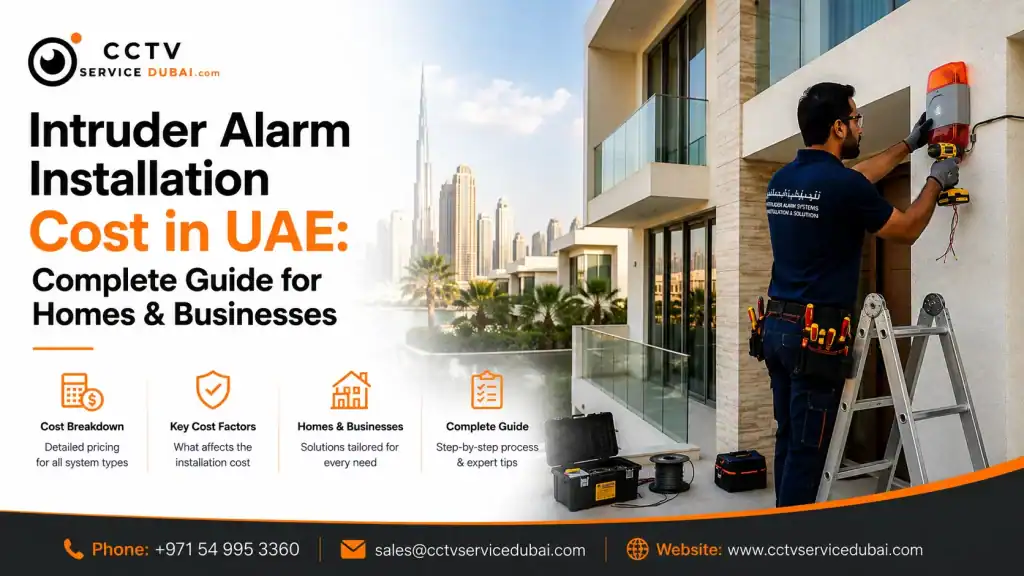
How Much Does Intruder Alarm Installation Cost in the UAE? The intruder alarm installation cost in UAE depends on the property size, number of sensors, alarm type, installation complexity, monitoring requirements, and whether the system is wired or wireless. A basic home system can be relatively simple, while a commercial installation may require multiple zones, door contacts, motion detectors, panic buttons, remote monitoring, and integration with CCTV or access control. Instead of choosing an alarm based only on price, consider the complete cost of equipment, installation, configuration, maintenance, and future support. What Is an Intruder Alarm System? An intruder alarm system is designed to detect unauthorized entry or suspicious activity and alert the property owner, security personnel, or monitoring service. A typical system can include: Control panel Door and window contacts PIR motion sensors Glass-break detectors External siren Internal sounder Panic buttons Keypads Remote controls Mobile or remote notifications When a sensor detects an event, the control panel processes the signal and activates the appropriate alert. For example, if someone opens a protected door while the alarm is armed, the door contact can send a signal to the control panel, which then activates the alarm. What Affects Intruder Alarm Installation Cost in UAE? There isn’t one fixed price for every property. The intruder alarm installation cost in UAE can change depending on several factors. 1. Property Size A small apartment may require only a few sensors. A villa, warehouse, office, or commercial building may need significantly more detection points. 2. Number of Protected Areas More doors, windows, rooms, and access points generally mean more sensors and installation work. 3. Wired vs Wireless Wired systems can be practical during construction or renovation when cables can be concealed easily. Wireless systems can be useful when installing new cabling would be disruptive. 4. Type of Sensors Different areas may require different detection technologies. For example: PIR motion sensors Magnetic door contacts Glass-break detectors Outdoor beams Smoke or heat detection, where integrated appropriately 5. Monitoring A system with professional monitoring or remote notification may have additional equipment or recurring service costs. 6. Integration Integrating an alarm with CCTV, access control, or building-management systems can increase project complexity. What Is Included in Intruder Alarm System Installation? Professional intruder alarm system installation normally includes more than mounting sensors. A typical project can involve: Site survey Security assessment Alarm system design Equipment selection Sensor installation Control-panel installation Siren installation Cabling or wireless configuration Zone programming User setup System testing Customer training The installer should explain what each sensor protects and how the alarm behaves during different events. How Does an Intruder Alarm Work? The basic process is straightforward: Sensor → Control Panel → Alarm Event → Notification For example: The alarm is armed. An unauthorized person opens a protected door. The door contact detects the opening. The signal reaches the control panel. The control panel identifies the affected zone. The siren activates. A configured notification may be sent. Security personnel or the property owner can respond. Modern systems can also provide event logs that help users understand when an alarm was triggered and which zone caused the event. Are Wireless Domestic Intruder Alarms a Good Option? Wireless domestic intruder alarms can be a practical option for homes where installing new cables would be difficult or disruptive. They can be suitable for: Apartments Villas Small offices Rented properties Renovated homes Common wireless components include: Wireless PIR sensors Wireless door contacts Wireless keypads Wireless sirens Remote controls Advantages of Wireless Systems Less visible cabling Faster installation in many situations Easier installation in finished properties Flexible sensor positioning Easier expansion in some systems However, wireless systems depend on batteries and radio communication. Therefore, battery monitoring and regular maintenance are important. Are Easy Fit Burglar Alarms Suitable for Everyone? Easy fit burglar alarms are designed to simplify installation and setup, making them attractive for homeowners who want a straightforward security solution. They can work well for relatively simple properties where advanced integration isn’t required. However, a DIY-style alarm may not be appropriate for: Large villas Warehouses Retail stores Offices with multiple access points Industrial properties High-security environments For larger properties, professional design and installation can provide better coverage and more reliable configuration. What Is the Burglar Alarm Fitted Cost? The burglar alarm fitted cost depends on the equipment, property layout, number of sensors, installation complexity, and additional services. Instead of asking only: “How much is the alarm?” Ask for a complete quotation covering: Cost Area What to Check Alarm panel Brand and model Sensors Quantity and type Keypad Included or separate Siren Internal/external Installation Labour included Programming Included Testing Included Mobile app Availability Monitoring Monthly/annual cost Warranty Duration Maintenance AMC or service plan This gives you a much clearer picture of the actual project cost. What Is Commercial Intruder Alarm Installation? Commercial intruder alarm installation is designed for businesses that need to protect larger or more complex premises. Commercial environments may include: Offices Retail stores Warehouses Restaurants Hotels Factories Showrooms Storage facilities Commercial buildings A commercial alarm system may use multiple detection zones. For example: Reception → Office Area → Server Room → Warehouse → Storage → Emergency Exit Each area can have its own security requirements. Commercial Alarm Systems May Include Multiple PIR sensors Door contacts Panic buttons External sirens Internal sounders Keypads Multiple user profiles Remote notifications Alarm monitoring CCTV integration The system should be designed according to the property’s risk profile rather than using a standard package for every business. What Does an NSI Approved Alarm Mean? The term NSI approved alarm refers to alarm systems or alarm-related services associated with the National Security Inspectorate (NSI), a UK-based certification body for security and fire-safety providers. This keyword is commonly searched by buyers who are researching certified alarm systems and installers. However, UAE customers should be careful not to assume that an NSI approval automatically means a system meets every UAE-specific requirement. When selecting an alarm for a UAE property, consider: Local regulations Building requirements Insurance requirements Monitoring
Top Access Control System Brands & Suppliers in Dubai & Abu Dhabi: Buyer’s Guide

The best access control system suppliers in Dubai should provide genuine products, technical design, professional installation, system integration, configuration, warranty, and after-sales support. Enterprise buyers should compare brands such as Honeywell, LenelS2, and Suprema based on scalability, authentication methods, integrations, software, compliance requirements, and long-term maintenance—not simply the equipment price. For enterprise and government projects, choosing the supplier is often just as important as choosing the access-control brand. A good supplier should be able to support the complete lifecycle: Consultation → Design → Supply → Installation → Configuration → Testing → Training → Maintenance What Is an Enterprise Access Control System? An enterprise access control system manages who can enter specific buildings, floors, rooms, or restricted areas while maintaining records of access events. Unlike a basic single-door biometric device, enterprise systems can manage: Multiple buildings Multiple doors Thousands of users Different access permissions Multiple departments Security zones Visitor credentials Employee credentials Mobile credentials Access reports Alarm events Integration with CCTV For large organizations, access control becomes part of the wider physical-security infrastructure. A centralized system can allow security teams to manage users and permissions from a single platform. Which Access Control Brands Should UAE Businesses Consider? Honeywell, LenelS2, and Suprema are three established technology options worth evaluating, but the right brand depends on the project’s requirements. Other brands may also be appropriate depending on the application, existing infrastructure, budget, and required integrations. Brand Typical Strength Suitable For Honeywell Integrated security & access Enterprise & commercial LenelS2 Enterprise access control Large organizations Suprema Biometrics & access control Corporate & biometric applications The goal should not be to identify one universally “best” brand. Instead, compare the actual solution against your requirements. Why Consider Honeywell Access Control in the UAE? Honeywell offers access-control and integrated-security solutions for organizations ranging from smaller businesses to enterprise environments. Honeywell’s security portfolio includes access control, video surveillance, intrusion detection, and integrated security solutions. Its MAXPRO Access platform supports traditional access-control functionality alongside remote management and reporting capabilities. For organizations researching honeywell access control distributors in UAE, it is important to distinguish between: Authorized distributors Authorized dealers System integrators Installation companies Maintenance providers Honeywell provides an official UAE dealer locator for finding authorized dealers and channel partners. It also identifies integrated security dealers that can support its Pro-Watch solution for enterprise businesses. What Should You Ask a Honeywell Supplier? Before purchasing, ask: Is the supplier authorized? Which Honeywell access-control platform is being proposed? Is installation included? Can the system integrate with CCTV? What credential types are supported? What is the maximum system capacity? Is training included? What technical support is available? What is the warranty? Is AMC available? Honeywell’s own partner information emphasizes authorized partners, training, technical support, and after-sales support, making supplier verification particularly important for enterprise deployments. What Is Lenel Access Control UAE Used For? LenelS2 is positioned as an enterprise physical-security platform designed for organizations with demanding access-control and integration requirements. Its portfolio includes: Access control Video management Mobile credentials Cloud security Identity management Security integrations LenelS2 describes its architecture as scalable and open, with support for third-party integrations. Its OnGuard platform can integrate access control and video monitoring and is designed for organizations ranging from smaller businesses to complex enterprise environments. For buyers researching lenel access control UAE, the key consideration should therefore be the complete system architecture rather than the reader alone. LenelS2 May Be Suitable When You Need: Multi-site access management Enterprise-level security Centralized administration Advanced reporting Video integration Mobile credentials Multiple access levels Third-party integration LenelS2 also offers cloud-based access-control options, including OnGuard Cloud, for organizations considering cloud-managed physical security. Why Is Suprema Popular for Biometric Access Control? Suprema specializes in biometrics, access control, and time-attendance technologies, making it an option for organizations that require biometric authentication alongside physical access management. Its product ecosystem includes: Fingerprint authentication Facial recognition Access-control devices Time attendance Controllers Mobile credentials Centralized management Suprema operates a dedicated UAE entity, Suprema Middle East FZCO, providing regional sales and technical support. For businesses searching for suprema access control dealers in Dubai, the company also provides access to authorized distributors, system integrators, and dealers through its partner network. Suprema Can Be Considered For: Corporate offices Educational institutions Healthcare facilities Industrial facilities Government environments Multi-door access Biometric attendance High-security areas What Is a Door Access Control System UAE Solution? A door access control system UAE solution controls entry to individual doors using authentication technologies such as cards, PINs, fingerprints, facial recognition, mobile credentials, or other approved methods. A typical system includes: Reader → Controller → Lock → Exit Device → Door Sensor → Management Software Depending on the project, it may also include: Power supply Network switches Server or cloud platform Visitor management CCTV integration Alarm integration Elevator access Turnstiles Parking barriers Common Authentication Methods Method Best Use RFID/Card Offices & general access PIN Small offices & restricted areas Fingerprint Attendance & access Facial Recognition Touchless access Mobile Credential Modern enterprise environments Multi-Factor Higher-security applications The appropriate authentication method depends on security requirements, user convenience, privacy considerations, and the selected platform. What Should You Look for in Access Control System Suppliers in Dubai? When comparing access control system suppliers in Dubai, evaluate their ability to deliver the complete project rather than simply supplying hardware. 1. Brand Authorization Ask whether the company is an authorized distributor, dealer, integrator, or reseller for the proposed brand. 2. Technical Expertise The supplier should understand: Access controllers Readers Locks Networking Software Biometrics Door hardware System integration 3. Project Experience Ask whether they have completed projects similar to yours. 4. Installation Professional installation is essential because poorly installed locks, readers, controllers, or cabling can create reliability problems. 5. Integration Check whether the system can integrate with: CCTV HR systems Time attendance Visitor management Building management Alarm systems 6. Support Ask about: Warranty Spare parts Remote support On-site support Software updates AMC 7. Scalability Your system should support future expansion if you plan to add more: Employees Doors Buildings Locations Security zones How Do You Choose
The Practical Field Guide to Biometric & Door Access Control Installation in UAE

The biometric access control system dubai businesses install today does two jobs at once – it secures the door and it tracks the workforce. Physical keys and punch cards are replaced by fingerprint, face recognition, or RFID credentials and all door events sync directly into HR and payroll. But the system has to meet local life-safety rules, especially for fire egress, so a good install is as much about compliance as hardware. In simple terms, an access control system is an electronic device that verifies a person’s identity by cross-checking it against a list of approved identities before it opens a door, and records the time of the event. UAE Businesses Moving Away from Keycard Access to Biometrics Physical keys and basic RFID cards leave security holes most offices don’t notice until something goes wrong – a lost badge, or a card passed quietly from co-worker to co-worker. Biometric verification closes that gap by connecting access and time logs to something that can’t be lent out: someone’s actual fingerprint, face or palm. Shared swipe cards and keys are a constant headache for offices across Dubai and Abu Dhabi, leaking security and costing HR hours untangling missing or disputed punch logs. A properly deployed access control system uae setup addresses both at the same time: No More Buddy Punching. “There’s no swiping a card, someone has to be there in person, with their face, palm or fingerprint.” Access by department, not just the building. General staff have access to the main floor during working hours; the server room is off-limits to all but certified IT staff, 24/7. Automatic emergency release. It is wired correctly to communicate with the building fire alarm panel and release the fail-safe magnetic locks when an alarm sounds. What Is Included in a Professional Door Access Installation? The complete door access installation is made up of six components that work together; an authentication reader, a controller board, electronic locking hardware, an exit sensor, a regulated power supply with battery backup and the management software that holds it all together. In practice the signal path goes from the reader – be it a biometric scanner or a HID card reader – into the access controller over Wiegand, OSDP or TCP/IP. The controller then decides and triggers the electric lock (maglock or strike) or the exit sensor or push button on the way out. What each part does on site: Component Function Typical Field Example Terminal / reader Credential capture at door ZKTeco ProFace X, SpeedFace, HID Signo Electronic lock Physically secures door frame 600-pound magnetic lock, drop bolt, electric strike Exit device Allows exit from inside the secure area Touchless IR exit sensor Power supply (PSU) Stable 12V/24V DC with battery backup 12V 5A power box with 7Ah battery Controller & software Checks permissions and logs all activity InBio260, ZKBio CVSecurity, ZKBioTime Any quote for a door access control install should include all five, not just the reader on the wall. How Does ZKTeco Biometric Work for Time & Attendance Installation? To install a zkteco biometric system, terminals (from the SilkBio, ProFace, or G3 series) need to be installed at each entry point, either standalone or network-connected, and push-communication protocols must be configured so that attendance data flows in real time to the HR software. For one practical reason, ZKTeco is one of the most popular platforms in the region; the same hardware opens the door and captures shift attendance, so businesses are not running two separate systems. An experienced zkteco biometrics installer will typically go through three steps in the setup: Network integration — the terminal is assigned a static IP, or connects over Wi-Fi/TCP-IP on an isolated security VLAN so it can communicate with the local server or cloud endpoint Template registration — fingerprint minutiae or 3D facial templates are enrolled at the reader or through a USB desk enrolment scanner Lock relay wiring — the terminal’s onboard relay (COM, NO, NC) is wired to the power circuit of the magnetic lock, wired through a push-to-exit button and a break-glass emergency switch What Does a ZKTeco Attendance Management Installer Really Install? The reader is only half done. The zkteco attendance management installer does most of the heavy lifting in the back end, setting up shift rotations, grace periods, overtime rules, weekend schedules, automated payroll exports within platforms like ZKBioTime 8.0 or ZKBio CVAccess. Multi-shift scheduling – split shifts, night shifts and grace periods for late arrivals (eg 15 minutes allowance) Departmental hierarchies – managers are automatically notified when a team member is late or takes unauthorised leave Direct Payroll Integration – Transaction logs exported directly into regional payroll and ERP formats including SAP, Oracle, Zoho People and Tally Which Locking Hardware Works on Which Door? The right lock depends on the door, not personal preference. Electromagnetic locks go with solid doors, drop bolts are for frameless glass, and electric strikes are for wooden latch doors. Frameless glass doors require a U-bracket or a frameless glass clamp mount with an electric drop bolt or shear lock since you cannot drill into tempered glass. Solid wood and aluminium doors usually require a 600 lb electromagnetic lock with “L” or “Z” brackets depending on the direction the door swings Server rooms and heavy metal doors usually require a lock with a higher-holding-force (1200 lb) and a real-time door position sensor that triggers an alarm if the door is propped open ZKTeco vs HID Access Control: Which Should You Choose? ZKTeco is a cost-effective solution that can do biometric door access and time-attendance at the same time. Choose HID if you are in a high security, multi-site corporate environment where encrypted mobile credentials and enterprise IT architecture are more important than cost. Factor ZKTeco Systems HID Global System Primary Strength Native Biometric attendance and access combination High security credential encryption (Seos, BLE/NFC) Authentication Face, palm, fingerprint, RFID, PIN Smartcards, smartphone mobile IDs, encrypted Focus software Attendance, leave management, basic access Multi-site enterprise security management, worldwide Cost profile Highly cost effective for SMBs and offices Enterprise investment premium For corporate campuses that
Best CCTV Camera Brand for Your Property in the UAE: Hikvision vs Dahua vs Hanwha Vision

Hikvision, Dahua, and Hanwha Vision (the brand that used to be Samsung’s surveillance division) are all solid choices — the brand name isn’t really what decides whether your CCTV system works well. What actually matters is the specific camera model, the resolution and lens for your exact application, the recorder, the storage, the network behind it, and who installs it. If you’re searching for hikvision in dubai or comparing hikvision vs dahua, don’t stop at the logo. Compare the full setup. Why the Brand Isn’t the Only Decision That Matters People searching for hik vision dubai, or comparing Hikvision against Dahua, often assume the brand alone settles the question. It doesn’t. A camera is one part of a system, and a good brand paired with the wrong setup still gives you a bad result. A reliable CCTV system actually comes down to: Where the camera is positioned The resolution you actually need for that spot Lens choice and field of view Night vision performance Recording and storage capacity Your networking infrastructure How well the system is installed Ongoing configuration and maintenance Get any one of these wrong and even the best camera on the market won’t give you usable footage. Why Hikvision Is Popular for CCTV Systems in Dubai Hikvision covers an unusually wide range of surveillance products — network cameras, PTZ cameras, NVRs, access control, video intercoms, and AI-enabled surveillance. That range is a big part of why it’s such a common search: buyers looking for hikvision in dubai find that the catalogue stretches from small office and home setups all the way to large commercial and industrial installations, with local distribution and support available through UAE channels. What’s actually in the Hikvision range: IP cameras Dome cameras Bullet cameras PTZ cameras NVRs PoE devices Access control systems Video intercom systems AI surveillance Infrared cameras The catch is that not every Hikvision camera suits every job. A camera built for a shop entrance isn’t the right pick for a large outdoor parking lot or an industrial perimeter, even within the same brand. What Does “Hik Vision Dubai” Actually Mean for Buyers? “Hik vision dubai” is one of the most common ways people search for Hikvision products, suppliers, installers, and support in Dubai — but the term covers several different things, and it’s worth knowing which one you actually need: Equipment suppliers Approved distribution channels CCTV installation companies Security system integrators Maintenance providers Buying the camera is only the starting point. A full CCTV project typically also involves a DVR or NVR, hard-drive storage, PoE switches, Cat6 network cabling, camera mounting and configuration, remote viewing setup, and preventive maintenance down the line. Compare the whole package, not just the price tag on the camera itself. Is Hikvision Available for CCTV Projects in Ajman? Yes — Hikvision equipment is available across the UAE, including for hikvision ajman projects, but picking the right camera still comes down to what the property actually needs. People searching that term are usually after one of three things: equipment, an installer, or ongoing maintenance support. Before buying, it’s worth working through: How many cameras the site needs Indoor or outdoor mounting Required resolution Night vision requirements How long footage needs to be retained Existing network infrastructure Whether remote monitoring is needed Room for future expansion A villa typically needs a fairly straightforward multi-camera setup. A warehouse is a different problem entirely — long-range cameras, perimeter coverage, larger storage, and centralised recording. Is Samsung Still a CCTV Brand? Not under that name. Samsung used to have a professional video-surveillance division, but that business is now known as Hanwha Vision — a distinction that matters if you’re searching for samsung cctv dubai and expecting to find current Samsung-branded products. Hanwha Vision was previously called Hanwha Techwin and officially rebranded to Hanwha Vision on 1 March 2023. So anyone searching for Samsung CCTV in Dubai today is usually looking for one of two things: legacy Samsung surveillance equipment already installed somewhere, or the current Hanwha Vision product line. What to Do If You Still Have an Old Samsung CCTV System Before you replace anything, it’s worth checking a few things first: The exact camera model numbers The DVR or NVR model Cable type in use Recording format Whether current cameras are still compatible with newer equipment Availability of replacement parts Any software compatibility issues A competent CCTV specialist can look at the existing setup and tell you honestly whether it’s worth repairing, upgrading in parts, or replacing outright — rather than assuming a full rip-and-replace is the only option. Hikvision vs Dahua: How Do They Actually Compare? Both Hikvision and Dahua have large product portfolios, so the better choice really depends on the specific models and what your project needs — not the brand name on its own. Dahua’s current MENA lineup includes network cameras, HDCVI cameras, PTZ cameras, thermal cameras, network recorders, storage, access control, and time-attendance systems. Feature Hikvision Dahua IP cameras Wide range Wide range NVRs Available Available PTZ cameras Available Available AI features Available on select models Available on select models Thermal cameras Yes Yes Access control Available Available Video management Available Available Best choice Depends on the project Depends on the project What to Actually Compare Skip the “Hikvision or Dahua” question and compare on the details instead: sensor and lens quality, resolution, night vision performance, AI analytics, compression, WDR, storage requirements, operating temperature range, weatherproofing, network support, warranty terms, and technical support. Dahua, for instance, now offers several camera families spanning entry-level through high-resolution multi-sensor models — the family you pick matters more than the logo on the box. Which CCTV Camera Type Should You Choose? The best camera for your property comes down to where it’s going and what you actually need to see. Dome Cameras Good for reception areas, offices, retail interiors, and indoor corridors. Small and discreet, which makes them an easy fit for indoor spaces where a bulky camera would stand out. Bullet Cameras Suited to building exteriors,
CCTV Camera Installation in Abu Dhabi: Complete Guide, Cost & Requirements
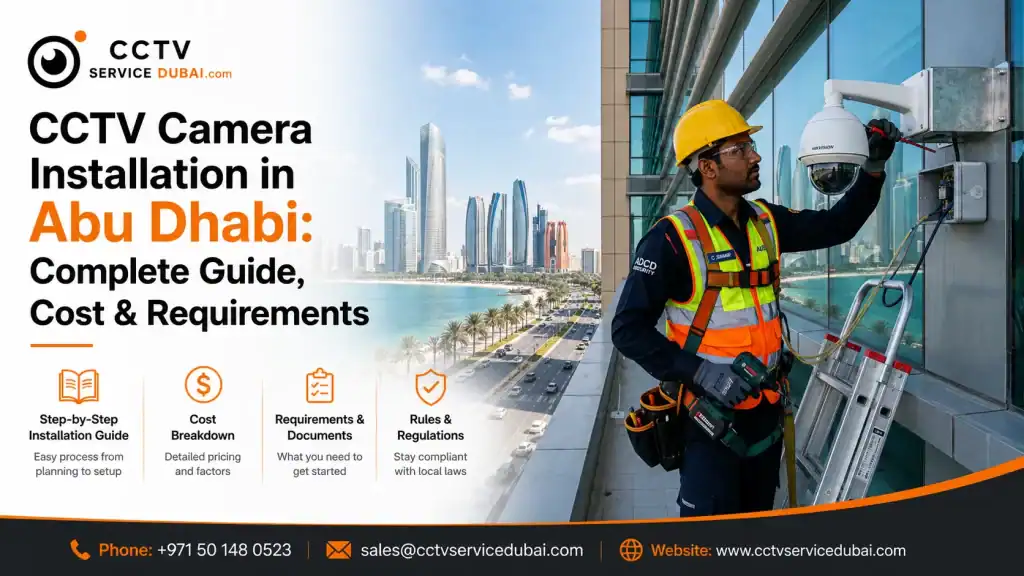
Professional CCTV camera installation abu dhabi involves far more than mounting cameras and connecting an NVR. A reliable system needs a proper site assessment, correct camera positioning, suitable equipment, structured cabling, adequate storage, testing, documentation, and compliance with Abu Dhabi’s monitoring regulations under the Abu Dhabi Monitoring and Control Centre (ADMCC). Expect to budget roughly AED 1,200–4,500 for the compliance permit alone, plus equipment and labour on top, with approval typically taking two to ten working days depending on premise type. This guide walks through how installation works, what actually drives the cost, how to choose a company, and what to check before signing a quote. What Is CCTV Camera Installation in Abu Dhabi? CCTV installation is the process of designing, installing, configuring, and testing a video surveillance system for a residential, commercial, industrial, or institutional property. A professional cctv camera installation abu dhabi project normally starts with a site survey rather than jumping straight into selecting cameras. The installer assesses entrances, exits, reception areas, parking spaces, corridors, storage areas, cash-handling points, restricted zones, and any other location that may need monitoring. The final system can include: CCTV cameras Network Video Recorder (NVR) Hard drives for video storage PoE switches Network and power cabling Monitors UPS or backup power Remote viewing configuration Access control integration Video management software Warning or monitoring signage where applicable The objective is a system that provides useful footage while fitting the property’s operational and regulatory requirements — not simply the maximum number of cameras a budget allows. Why Professional CCTV Installation Matters A CCTV system is only useful when the cameras capture clear, relevant footage and the recordings stay available when you actually need them. Poor installation can result in: Blind spots around entrances Faces obscured by backlighting Incorrect camera angles Poor night-time visibility Damaged or poorly terminated cables Insufficient storage Network interruptions Unstable remote viewing Cameras covering areas that provide little security value Professional security camera installation avoids these problems by designing the system around the actual property rather than installing a predetermined camera count. A warehouse may need long-range perimeter coverage, while a retail store needs detailed views of entrances, counters, aisles, and cash-handling areas — the same 8-camera package will not serve both well. CCTV Regulations and Compliance in Abu Dhabi CCTV and monitoring systems in Abu Dhabi operate within a regulated environment under Abu Dhabi Law Executive Regulations No. 5 of 2011, which established the authority now known as ADMCC. Exact requirements can vary by property type, business activity, and location, so the Abu Dhabi Government’s official Gazette portal remains the authoritative source to verify current rules — businesses shouldn’t rely only on generic CCTV specifications found online. Before beginning a commercial CCTV project, a professional installer should confirm: Applicable regulatory requirements Required approvals or submissions Technical specifications Camera coverage requirements Recording and storage requirements Documentation requirements Installer or system-provider accreditation Inspection or acceptance procedures, where applicable Requirements do change, so confirm the latest applicable rules before finalizing a system design rather than assuming last year’s specification still applies. What Is ADMCC? The Abu Dhabi Monitoring and Control Centre (ADMCC) issues the permits, non-objection certificates, and installer accreditations that make a CCTV system legal to operate in the emirate. It also sets the technical rulebook — camera resolution, mandatory coverage zones, and footage retention periods. A professional cctv camera installation company in Abu Dhabi should be able to explain exactly which requirements apply to your property and what documentation or approvals are needed — not just claim to be “ADMCC compliant” without a certificate to show for it. According to a regulatory review by law firm Al Tamimi & Company on Abu Dhabi’s monitoring and control regulations, operating a monitoring system without ADMCC approval can carry a fine of AED 50,000 to AED 200,000, imprisonment of up to two years, or both, with authorities able to confiscate non-compliant equipment. Day-to-day inspection failures for smaller compliance gaps typically start from AED 5,000. This is not a step worth skipping to save time. How to Choose a CCTV Installation Company in Abu Dhabi Choosing the cheapest quotation is rarely the best approach for a commercial CCTV project. Before hiring a cctv camera installation company in Abu Dhabi, evaluate the provider against the following. 1. Relevant Experience Ask whether the company has completed projects similar to yours. A CCTV system for a retail shop, office, warehouse, villa, hotel, restaurant, school, factory, or construction site can require very different equipment and camera layouts. 2. Site Survey Avoid companies that provide a final quotation without understanding the property. A proper site survey should consider building layout, camera mounting points, lighting conditions, cable routes, network infrastructure, entry and exit points, high-risk areas, recording requirements, and future expansion. 3. Camera Specifications Don’t accept a quotation that simply says “HD cameras.” The proposal should identify resolution, lens type, field of view, night vision, IR range, WDR, low-light performance, weather protection, AI features where required, and camera form factor. 4. Recorder and Storage The NVR and hard drives should be sized according to camera count, resolution, frame rate, recording mode, compression, required retention period, and future camera expansion. A system with excellent cameras but inadequate storage can still fail to meet the property’s operational requirements — and, for regulated premises, its compliance requirements too. 5. After-Sales Support CCTV systems require ongoing maintenance. Ask whether the company provides preventive maintenance, camera cleaning, NVR troubleshooting, hard-drive replacement, cable testing, firmware updates, camera repositioning, remote-viewing support, and system health checks — our CCTV maintenance services page breaks down what a standard service contract usually covers. CCTV Camera Types for Abu Dhabi Properties Different properties need different camera types. A professional installer should recommend cameras according to the environment rather than promoting one model across every site. Dome Cameras Dome cameras are commonly used indoors because their compact design fits well in offices, retail stores, reception areas, corridors, hotels, and commercial buildings, offering a discreet solution while keeping a professional appearance. Bullet Cameras Bullet cameras suit applications where a visible
How Can You Choose the Right CCTV Installation Company in Sharjah?
CCTV installation Sharjah helps homes, offices, shops, warehouses, hotels, and industrial properties improve surveillance and security. A professional installer can assess the property, recommend suitable cameras, install the cabling and recording equipment, configure remote monitoring, test the system, and provide maintenance. Businesses should also verify applicable Sharjah Police requirements before selecting a provider. What Does CCTV Installation in Sharjah Include? CCTV installation in Sharjah involves designing, installing, configuring, and testing a complete surveillance system according to the property’s security requirements. A professional installation normally includes: Site inspection Camera positioning CCTV camera installation Cable installation DVR/NVR installation Network configuration Storage configuration Mobile viewing setup Camera testing System commissioning Maintenance recommendations The exact requirements depend on the property size, number of cameras, coverage areas, storage requirements, lighting conditions, and whether the system needs integration with other security technologies. Why Is Professional CCTV Installation Important? Professional CCTV installation is important because camera quality alone does not guarantee effective surveillance. Correct positioning, cabling, configuration, recording, and system testing all affect the final performance. Poorly installed cameras can create: Blind spots Poor night-time visibility Unstable connections Recording failures Cable damage Incorrect camera angles Insufficient storage Difficult maintenance A professional installer evaluates the property before recommending equipment. For example, an outdoor entrance may require a different camera configuration from an indoor reception area. Similarly, a warehouse may require wider coverage, longer-range cameras, or specialized surveillance features. Which CCTV Cameras Are Suitable for Properties in Sharjah? The right CCTV camera depends on where it will be installed, the required viewing distance, lighting conditions, coverage area, and security objective. Camera Type Best Application Main Benefit Dome Camera Offices & indoor areas Discreet design Bullet Camera Outdoor areas Directional coverage PTZ Camera Large properties Pan, tilt & zoom IP Camera Modern networks High-resolution network video Turret Camera Indoor/outdoor areas Flexible positioning ANPR Camera Vehicle entrances Number plate recognition AI Camera Advanced surveillance Analytics capabilities Should You Choose IP or Analogue CCTV? IP CCTV is often preferred for modern surveillance projects because it can provide high-resolution network video, remote management, and easier integration with network infrastructure. Analogue HD systems can still be suitable for certain upgrades where existing coaxial cabling is available. The best option depends on the property’s existing infrastructure and project requirements rather than choosing a technology solely because it is newer. How Does CCTV Camera Installation Sharjah Work? CCTV camera installation Sharjah should follow a structured process beginning with a site assessment and ending with testing and commissioning. Step 1: Site Survey The installer evaluates: Property layout Entrances and exits Parking areas Restricted zones Lighting conditions Existing cabling Network infrastructure Recording requirements Step 2: Security Planning The camera locations are planned according to the areas that require monitoring. The objective should be effective coverage rather than simply installing as many cameras as possible. Step 3: Camera Selection The appropriate camera types, resolution, lenses, night vision capabilities, storage, and recording equipment are selected. Step 4: Cabling Cables are routed carefully to connect cameras with NVRs, switches, power supplies, or other network equipment. Step 5: Installation Cameras are securely mounted and positioned to provide the required field of view. Step 6: Configuration The installer configures: Camera settings Recording schedules Storage Network settings User access Remote viewing Step 7: Testing Every camera should be tested for: Image quality Recording Night vision Network connectivity Remote access Storage Step 8: Handover The customer receives the necessary system information and guidance for operating the surveillance system. What Should You Check Before Hiring CCTV Installation Companies in Sharjah? When comparing CCTV installation companies in Sharjah, look beyond equipment prices and evaluate technical expertise, installation quality, maintenance support, documentation, and applicable regulatory requirements. Before choosing a provider, check: Experience – Does the company handle projects similar to yours? Technical expertise – Can its technicians configure and troubleshoot the complete system? Equipment – Does the company use reliable surveillance hardware? Installation quality – Does it provide organized cabling and professional mounting? Testing – Does the provider test cameras and recording after installation? Maintenance – Is AMC or ongoing technical support available? Documentation – Will you receive relevant system information? Compliance – Can the provider explain the applicable Sharjah requirements? Avoid choosing a company based only on the lowest quotation. A cheaper installation can become more expensive if the system has poor coverage, unreliable cabling, insufficient storage, or inadequate after-sales support. What Are Sharjah Police Approved CCTV Companies? The phrase “Sharjah Police approved CCTV companies” generally refers to security-service providers that meet applicable requirements or approvals for relevant security services in Sharjah. Businesses should verify a provider’s current status through official Sharjah Police channels rather than relying only on a company’s marketing claim. Sharjah Police provides an official Securing Vital Facilities – Security Service Providers service for security service providers. The service includes applications for private institutions in Sharjah and institutions outside Sharjah. Sharjah Police also publishes open-data information relating to approved early warning service providers and security services for facilities. Why Should You Verify Approval? Verification can help businesses avoid choosing a provider solely because it advertises itself as approved. Before signing a project, ask the provider to provide: Relevant approval details Commercial licence information Applicable security-service credentials Project documentation Maintenance arrangements Compliance information relevant to the property For projects requiring regulatory approval, confirm the current requirements directly with the relevant authority. What Is the Difference Between Regular and Approved CCTV Installation? The main consideration is whether the installation and provider meet the requirements applicable to the specific property and security system, not simply whether the camera itself is approved. Factor Basic Installation Compliance-Focused Installation Site assessment May vary Structured assessment Camera selection Equipment-focused Requirement-focused Installation Standard Compliance considered Documentation May be limited More comprehensive Testing Basic System commissioning Maintenance Optional Can be planned through AMC Regulatory considerations May be overlooked Considered during planning This is why businesses should discuss compliance requirements before purchasing equipment. Which Properties Need CCTV Installation in Sharjah? CCTV systems can be used across residential, commercial, hospitality, retail, industrial, and institutional
How Can You Find CCTV Technician Jobs in Dubai and Build a Career?

CCTV technician jobs in Dubai are available across security companies, ELV system integrators, hotels, commercial buildings, residential communities, warehouses, and industrial facilities. Candidates can also pursue CCTV operator, engineer, installation, surveillance, security, and sales roles. Practical CCTV skills, IP networking knowledge, relevant training, and experience with installation and troubleshooting can improve career opportunities. What Types of CCTV Jobs Are Available in Dubai? CCTV careers in Dubai cover several technical, operational, security, engineering, and sales positions. The right role depends on your technical skills, experience, qualifications, and preferred working environment. Common CCTV-related roles include: CCTV Technician CCTV Operator CCTV Engineer CCTV Installation Technician CCTV Surveillance Operator Security Systems Technician CCTV Sales Executive Security Systems Engineer ELV Technician Security Systems Operator Current job listings show that employers are hiring for a mixture of these roles. For example, Indeed currently lists CCTV operator and CCTV technician vacancies in Dubai, while LinkedIn shows CCTV installation, systems engineering, senior technician, and ELV-related positions. For candidates searching specifically for CCTV technician jobs in Dubai, developing both installation and troubleshooting skills can open the door to several related career paths. What Does a CCTV Technician Do? A CCTV technician installs, configures, tests, maintains, and repairs surveillance systems to ensure cameras and recording equipment work correctly. Typical responsibilities include: Installing CCTV cameras Installing and terminating cables Configuring DVR and NVR systems Setting up IP cameras Configuring network connections Installing PoE switches Testing camera views Troubleshooting recording issues Maintaining surveillance systems Replacing faulty components Supporting remote monitoring Integrating CCTV with access control Current Dubai job listings reflect this combination of technical responsibilities. For example, recent listings include CCTV/ELV technician roles involving IP and analogue CCTV, access control, time attendance, video intercom, gate barriers, cabling, and troubleshooting. What Skills Do You Need for CCTV Technician Jobs in Dubai? The most useful skills are CCTV installation, IP networking, DVR/NVR configuration, troubleshooting, cabling, and familiarity with integrated security systems. Technical skills to develop CCTV camera installation IP camera configuration DVR/NVR setup Cat6 cabling Basic TCP/IP networking PoE switches Fiber-optic basics Camera testing CCTV troubleshooting Access control Time-attendance systems Preventive maintenance Video management software Soft skills also matter Employers may value technicians who can: Read installation drawings Complete technical reports Follow safety procedures Communicate with supervisors Work independently Troubleshoot systematically Meet project deadlines Communicate professionally with customers The more of these skills you can demonstrate through actual projects, the stronger your CV becomes. What Qualifications Can Help You Get CCTV Jobs in Dubai? Technical education, relevant CCTV training, practical experience, and applicable security certifications can improve your employability. Some regulated security-system roles also have specific SIRA requirements. Dubai’s Security Industry Regulatory Agency (SIRA) lists separate security cadre categories for Security Systems Engineer, Security Systems Technician, and Security Systems Operator. Its current requirements include approved training for these roles, along with other conditions depending on the category. SIRA also lists approved training centres offering courses such as: Security Systems Engineer Security Systems Technician Security Systems Operator Therefore, candidates should always check the requirements for the specific position they are applying for rather than assuming every CCTV job requires the same certification. What Are CCTV Operator Jobs in Dubai? CCTV operator jobs in Dubai focus primarily on monitoring surveillance systems, identifying suspicious activity, recording incidents, and escalating security events according to established procedures. A CCTV operator may be responsible for: Monitoring multiple camera feeds Identifying unusual activity Reviewing recorded footage Reporting incidents Maintaining observation logs Communicating with security teams Following emergency procedures Monitoring restricted areas Recent Dubai listings include CCTV operator and CCTV monitoring positions involving continuous surveillance, asset protection, employee and visitor safety, and incident reporting. This career path may suit candidates who prefer control-room and surveillance work rather than field installation. What Are CCTV Operator Jobs in Dubai Hotels Like? CCTV operator jobs in Dubai hotels typically involve monitoring guest areas, entrances, parking areas, back-of-house spaces, and other designated security zones. Hotel surveillance operators may work closely with the hotel’s security department. Typical responsibilities include: Monitoring hotel entrances Monitoring guest areas Observing parking areas Reviewing recorded footage Reporting incidents Monitoring staff-only areas Supporting investigations Following hotel security procedures Hospitality environments also require professionalism and confidentiality because operators may handle sensitive security information involving guests, employees, and visitors. Candidates interested in CCTV operator jobs in Dubai hotels should highlight surveillance experience, observation skills, communication, shift flexibility, and incident-reporting experience on their CV. GulfTalent currently lists CCTV Operator roles in Dubai, including a listing with Marriott International, demonstrating that hospitality is one of the environments where these positions can occur. What Is the CCTV Operator Jobs in Dubai Salary? CCTV operator salaries in Dubai vary according to experience, employer, responsibilities, qualifications, and benefits. Naukrigulf currently reports an average Dubai CCTV operator salary of approximately AED 2,672 per month, with a reported range of AED 2,000–AED 4,000 based on its salary dataset. Its experience-based figures also show differences across career stages, although these figures should be treated as market indicators rather than guaranteed offers. When evaluating a job offer, look beyond the basic salary and check whether the package includes: Accommodation Transportation Overtime Medical insurance Annual leave Air ticket Other allowances What Is the CCTV Engineer Jobs in Dubai Salary? CCTV engineer salaries are generally influenced by engineering qualifications, technical experience, project responsibilities, networking knowledge, and security-system expertise. Indeed currently reports an average Dubai CCTV engineer base salary of approximately AED 4,188 per month, based on 42 reported salaries updated in July 2026. Actual CCTV engineer jobs in Dubai salary offers can differ significantly. Engineers with experience in areas such as: CCTV system design ELV integration Networking Access control Project management System commissioning Technical documentation may qualify for more advanced positions than entry-level technicians. What Are CCTV Installation Jobs in Dubai? CCTV installation jobs in Dubai involve installing, configuring, testing, and commissioning surveillance equipment at residential, commercial, and industrial properties. A typical installation project may involve: Reviewing drawings and requirements Conducting a site survey Marking camera locations Installing camera brackets Running cables Terminating connections Installing
How Can Biometric Attendance Systems Abu Dhabi Improve Office Attendance?

Biometric Attendance Systems Abu Dhabi help offices automate employee attendance using fingerprint, facial recognition, or other biometric technologies. They create time-stamped attendance records, reduce manual entry, discourage buddy punching, simplify HR reporting, and can support payroll workflows. The right system depends on employee numbers, authentication method, software compatibility, security requirements, and future expansion plans. Key Takeaway For most offices, the best biometric attendance system is not simply the device with the most features. Businesses should choose a solution that matches their workforce size, authentication requirements, HR software, reporting needs, and future growth. A well-planned system should make attendance more accurate, easier to manage, and simpler to report without creating unnecessary administrative work. What Are Biometric Attendance Systems? Biometric attendance systems are digital employee attendance solutions that verify a person’s identity using a unique biological characteristic, such as a fingerprint or facial feature. Instead of depending entirely on paper registers, PINs, or attendance cards, the employee verifies their identity through a biometric terminal. Common biometric technologies include: Fingerprint recognition Facial recognition Palm recognition Iris recognition The system typically records check-in and check-out events and sends attendance information to management software. The exact capabilities vary by manufacturer and software platform, so businesses should confirm features before purchasing. A biometric attendance system typically involves employee enrollment and identity verification before attendance events are recorded. The NIST Digital Identity Guidelines provide broader technical guidance on identity proofing, enrollment, and authentication. Why Are Biometric Attendance Systems Important for Offices? Biometric attendance systems are important because they automate attendance recording and give HR teams a more consistent source of employee time data. Manual attendance processes can require employees and HR staff to enter, review, correct, and organize records. A suitable employee attendance system can reduce this repetitive work. Common benefits include: Automated attendance recording Faster employee check-in Reduced manual data entry Easier attendance reporting Better visibility of working hours Reduced risk of buddy punching Centralized employee records Easier attendance administration The business benefit comes from combining the biometric device with appropriate attendance-management software and processes. How Does a Biometric Attendance System Work? A biometric attendance system works by enrolling an employee’s biometric credential, verifying it during check-in or check-out, and recording the corresponding attendance event. The typical workflow is: Employee enrollment – The authorized employee is registered in the system. Biometric verification – The employee presents a fingerprint, face, or another supported biometric. Identity matching – The device verifies the presented biometric against the enrolled record. Attendance recording – The system records the event with the relevant time. Data synchronization – Information is transferred to the attendance-management platform. Reporting – HR can review attendance information and generate reports. NIST’s current Digital Identity Guidelines address areas such as identity proofing, enrollment, authentication, and authenticator management, although their scope is broader than office attendance systems. Businesses can use these concepts as useful technical context when evaluating identity-related systems. Which Biometric Technology Is Best for Office Attendance? Fingerprint and facial recognition are common choices for office attendance, but the better option depends on the workplace environment, employee requirements, and system-management needs. Technology Best suited for Main advantage Consideration Fingerprint Small and medium offices Practical and widely available Requires physical contact Facial recognition Modern offices Touchless authentication Device placement and environment matter Palm recognition Larger organizations Alternative biometric method May cost more Iris recognition Specialized environments Strong biometric identification More specialized infrastructur Is a Fingerprint Attendance System a Good Choice? A fingerprint attendance system can be a practical choice for offices that need straightforward employee identification and attendance recording. It is particularly suitable when: Employees use a fixed office location Contact-based authentication is acceptable The business wants a straightforward deployment Attendance reporting is the main requirement Fingerprint-related biometric data formats are also covered by established ISO/IEC biometric standards, including standards for the interchange of finger image data. Is Facial Recognition Better for Modern Offices? A facial recognition attendance system can be useful when a business prefers touchless employee authentication and wants a more modern attendance experience. However, businesses should evaluate: Lighting conditions Device positioning Recognition performance Employee enrollment Privacy and data-handling requirements Software compatibility ISO/IEC 24741:2024 provides an overview of biometric technologies including fingerprint, face, and iris recognition and discusses application and jurisdictional considerations. What Features Should You Check Before Buying? The most important buying factors are employee capacity, biometric technology, software compatibility, reporting, integrations, security controls, and future scalability. Before purchasing, check these features: 1. Employee Capacity Make sure the device and software can support your current workforce. Also consider expected employee growth. 2. Attendance Reporting Check whether the platform can generate reports for: Daily attendance Late arrivals Early departures Absences Overtime Working hours 3. HR and Payroll Integration If attendance data will be used for payroll, confirm that the system supports your existing HR or payroll workflow. 4. Multiple Locations Companies with multiple offices should check whether attendance data can be managed centrally. 5. Administrator Controls Look for role-based administrative access so only authorized personnel can change employee or system settings. 6. Backup and Data Management Ask how attendance records and biometric templates are stored, backed up, exported, and protected. How Can Biometric Attendance Improve Payroll Accuracy? Biometric attendance can improve payroll workflows by providing consistent time-stamped attendance records that HR teams can use when calculating working hours, overtime, absences, and other attendance-related information. For example, consider an office where employees previously recorded attendance manually. The HR team may need to: Collect attendance records. Check missing entries. Correct obvious errors. Calculate working hours. Prepare payroll-related data. With an integrated employee time tracking system, much of the attendance data can be captured automatically. The exact level of automation depends on the attendance software and its integration with the company’s HR or payroll platform. Can Biometric Attendance Prevent Buddy Punching? Yes. Biometric authentication can significantly reduce buddy punching because employees must authenticate using their enrolled biometric characteristic rather than simply presenting another employee’s card or PIN. This is one of the main reasons businesses consider biometric attendance. However, no